Opened Culture is a pioneering collaboratory and strategic consultancy dedicated to empowering educational institutions and communities. We stand as a beacon for change in the educational sector, offering a unique blend of strategic insight, practical support, and community engagement to revolutionize how education is delivered and experienced.

Search
Connect With Us
OECC-Artboard 1-100

Now imagine the same landscape tended differently. Imagine that the insight shared while the thinking is still warm has a place to be planted, cited, and found. Imagine that a video essay, an audio conversation, an interactive experience, a case narrative, and a written article stand side by side as scholarship of equal standing, each carrying the infrastructure that lets it travel. Imagine that an idea arriving before its season is met with mentoring rather than a form letter, and that the people reviewing your work understand their role as cultivation. Imagine a venue where the community itself decides what’s beautiful, and where beauty includes what’s still growing.

In that landscape, scholarship behaves like a living system. Works grow, version, and reseed as remixes in new collections. Knowledge stays visibly connected to its lineage. And the question of who gets to participate in knowledge-making is answered by an open door.

Opened Culture Collections is that landscape, planted and growing. It is a multimodal, open-access scholarly publishing ecosystem from Opened Culture, built for the communities working across open education, learning design, AI literacies, and academic innovation, and it lives in two connected spaces.

The Canopy is what the world sees: the public venue where finished works reach readers, carrying DOIs, structured metadata for scholarly indexing, and clear citations in every mode. The Understory is where the forest renews itself: our community of practice, where contributors develop their works alongside the people who tend each collection, build the craft of composing in the open, and receive the mentoring that turns an idea into a work ready for the light. Every contributor’s path runs through the Understory, because the health of the canopy depends on what grows below.

Everything growing here is rooted in a set of convictions about how knowledge should be made, shared, and honored. They shape our decisions daily, from how works are reviewed to how they travel once published. Explore our values in action here to see what we hold true and how we put it into practice.

Attribution is an act of care.

We believe citation is how a community honors its lineage. Every work published here credits the thinking that fed it, and every remix stays visibly connected to its original, so the roots of an idea are never lost.

We believe a venue’s credibility comes from the caliber and generosity of its community. Contributions are welcomed regardless of title, role, or affiliation, and every idea receives an honest reading with mentoring through the Understory, our community of practice, in place of a closed door.

We believe publishing should behave the way knowledge actually does. Works can be versioned as thinking evolves, collections go dormant and reseed rather than close, and work still in flight is welcome while the thinking is warm.

We believe knowledge is distributed most powerfully when nothing stands between the work and the people who need it. Every work is free to read, openly licensed at the collection level, and carries a DOI so it stays discoverable for the long term.

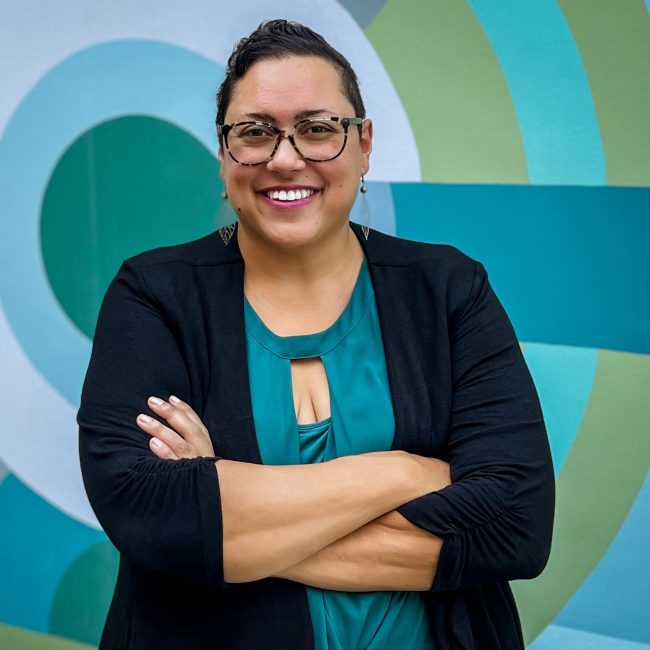
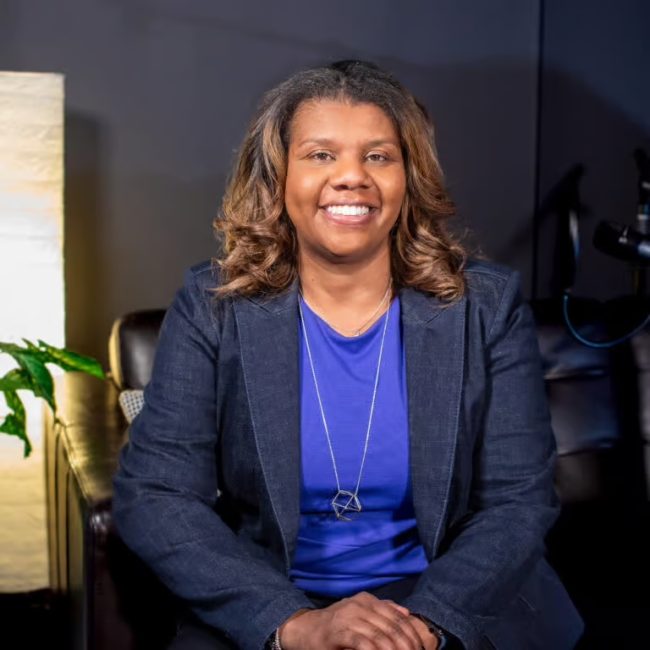
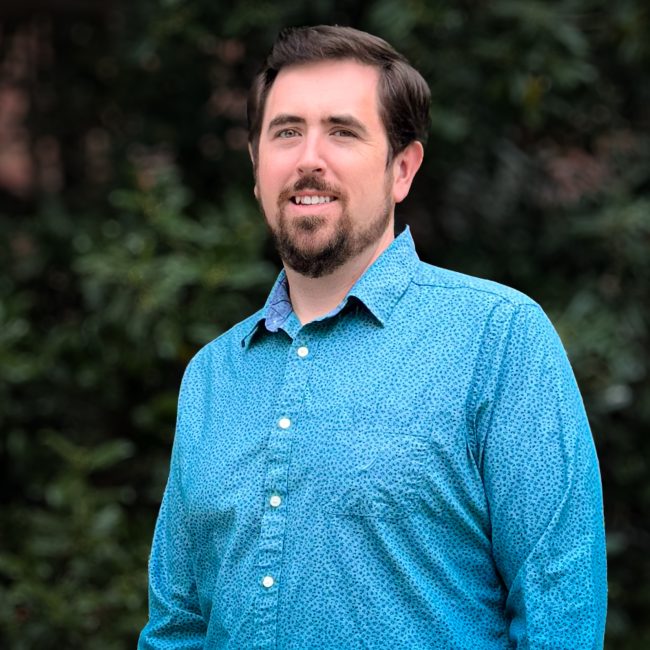
Opened Culture Collections was planted by a group of scholar-practitioners who have spent years working in the open together and kept watching the work they valued most go without a home. They serve as its first keepers, tending the collections growing now and welcoming the contributors who will tend what grows next.

Dr. Angela Gunder is the founder and CEO of Opened Culture, a global collaboratory advancing academic innovation, digital learning, and responsible approaches to emerging technology. She is the co-creator of the Dimensions of AI Literacies taxonomy, previously served as Chief Academic Officer at the Online Learning Consortium, and is the inaugural Agentic AI Humanitarian of the Year, recognized by Arizona State University. She earned her Ph.D. in teaching, learning, and sociocultural studies from The University of Arizona, where she serves as online faculty and a strategic consultant for innovative pedagogy.

Dr. Cristi Ford is an education leader and learning technology strategist with more than 20 years of experience advancing high-quality digital learning and broadening access across higher education and secondary education. She is the founder and host of the Teach and Learn podcast, an ASU+GSV Leading Woman in AI (2025), a 2022 OLC Fellow, and recipient of the 2024 Mildred B. and Charles A. Wedemeyer Award for Outstanding Practitioner in Distance Education. She holds a Ph.D. in Educational Leadership from the University of Missouri–Columbia.

Dr. Josh Herron is an interdisciplinary practitioner-scholar whose work bridges AI literacies, workforce development, and digital learning across higher education and industry. He is a co-creator of the Dimensions of AI Literacies taxonomy, with a scholarly foundation in electracy, multimodal composition, and post-pedagogy, and has served as faculty and an academic leader across research universities, regional comprehensive institutions, community and technical colleges, and fully online universities. He holds an M.A. from the University of North Carolina at Greensboro and a transdisciplinary Ph.D. from Clemson University.

Dr. Nicole Weber is an educator and learning technology leader who translates emerging technology trends into practical, high-impact strategies for instructors and students. Her recent work focuses on the ethical and effective integration of generative AI in pedagogy, including contributions to the Dimensions of AI Literacies taxonomy and applied research on empowering students to use AI for career readiness. At the University of Wisconsin–Whitewater, she coordinates the Instructional Design and Learning Technology master’s program. She earned her Ph.D. in Urban Education from the University of Wisconsin–Milwaukee.

In the daily work of research, teaching, and learning design, practitioners are navigating AI in real time: experimenting, questioning, revising, and passing what they learn through the soil they share. This collection gathers their voices the way rhizomes spread beneath a forest floor, laterally, in every direction at once, and mostly unseen until new growth reaches the light. Works surface in waves, so what you find here today is only the beginning of what’s taking root.

The forest is young, and the first collection is breaking ground now. If you have a story of AI in your research, teaching, or learning design that wants more room than a case example gives it, we would love to hear what you’re carrying. Tell us a little about it, in whatever state it’s in, and one of us will be in touch about how it might take root here.